










Does Collagen Decline Only Because of Aging? The Complete Medical Facts
What Is Collagen?
Collagen is the primary structural protein that forms the main component of the body's connective tissues, including the skin, bones, tendons, ligaments, and cartilage.
In the skin, collagen is found mainly in the dermis, where it plays a vital role in:
- Maintaining skin strength and structure: Collagen provides the supportive framework that keeps the skin firm and intact.
- Supporting skin elasticity and firmness: Collagen works alongside elastin—the protein responsible for skin elasticity—to help the skin stretch and return to its original shape, contributing to a smooth, youthful appearance.
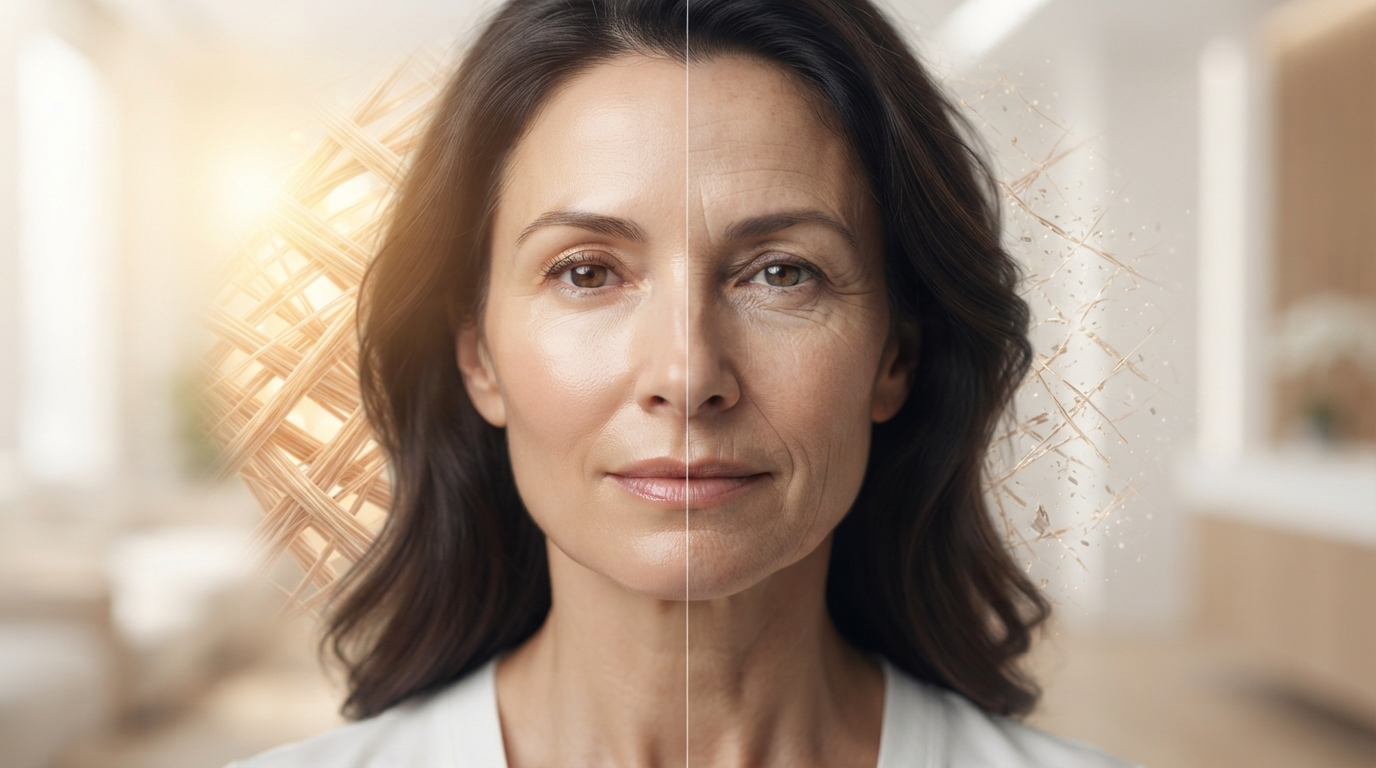
As collagen levels decline, the skin gradually develops visible changes, including:
- Fine lines and wrinkles
- Loss of firmness and elasticity
- Changes in skin texture and overall appearance
Is Aging the Only Cause of Collagen Loss?
No.
Aging is the primary natural cause of reduced collagen production, but it is not the only factor.
Collagen production typically begins to decline after the age of 20–25, decreasing by approximately 1% per year, with a more noticeable acceleration after the age of 40.
Collagen loss results from a combination of:
- Natural biological aging
- Environmental factors
- Lifestyle habits
What Accelerates Collagen Loss?
1. Ultraviolet (UV) Radiation
Long-term exposure to sunlight—especially UVA rays—causes photoaging. UVA penetrates deeply into the dermis, damaging collagen and elastin fibers and leading to their premature breakdown.
2. Smoking
Smoking significantly accelerates the degradation of collagen and elastin through several mechanisms, including:
- Reducing blood flow, oxygen, and nutrient delivery to the skin
- Increasing oxidative stress and the production of free radicals
- Activating matrix metalloproteinases (MMPs), enzymes that break down collagen
3. Oxidative Stress and Environmental Factors
Environmental pollutants and oxidative stress contribute to structural damage within the skin, accelerating collagen degradation over time.
4. Natural Aging
As we age, fibroblasts—the cells responsible for producing collagen—become less active, while collagen breakdown naturally increases.
Do Stress or Lack of Sleep Directly Reduce Collagen?
From a medical standpoint, there is currently no strong evidence that stress or sleep deprivation directly decreases collagen production.
However, both may contribute indirectly by:
- Increasing inflammation throughout the body
- Elevating stress hormones such as cortisol, which may suppress collagen synthesis and promote collagen breakdown
- Reducing the skin's ability to repair and regenerate efficiently
Can Creams Replace Lost Collagen?
The collagen found in most topical skincare products cannot penetrate deeply enough into the dermis to replace lost collagen because collagen molecules are too large to pass through the skin barrier.
However, certain topical ingredients can still be beneficial by:
- Improving skin hydration and strengthening the skin barrier
- Indirectly stimulating the skin's natural collagen production, particularly ingredients such as:
- Retinoids
- Vitamin C
- Peptides
How Can Collagen Production Be Stimulated Medically?
Several medical treatments aim to stimulate the body's own collagen production.
1. Microneedling
Microneedling creates tiny controlled micro-injuries in the skin, triggering the body's natural wound-healing response and stimulating new collagen and elastin production.
2. Medical Laser Treatments
Certain laser technologies—including ablative and non-ablative fractional lasers—promote collagen remodeling, improving skin quality, texture, and firmness over time.
3. Collagen Biostimulators
Injectable collagen biostimulators, such as poly-L-lactic acid (PLLA) and polycaprolactone (PCL), stimulate fibroblasts to gradually produce new collagen over several weeks to months.
Important: These treatments do not restore collagen immediately. Instead, they stimulate gradual collagen production, with results typically developing over weeks or months.
When Does Collagen Loss Begin?
Medically, collagen production generally starts to decline after the age of 20–25, continuing progressively throughout life.
However, the rate of decline varies considerably depending on:
- Genetics
- Sun exposure
- Smoking
- Lifestyle habits
- Environmental influences
Can Collagen Be Fully Restored?
No.
It is not currently possible to restore the skin to the collagen levels of youth.
However, modern treatments can:
- Significantly improve skin quality and appearance
- Stimulate the production of new collagen
- Slow future collagen degradation
Medical Summary
Collagen loss is a natural biological process associated with aging, but it is strongly influenced by external factors such as ultraviolet radiation, smoking, oxidative stress, and lifestyle habits.
Understanding these factors allows individuals to adopt preventive measures early, improve overall skin quality, and choose evidence-based treatments that support the body's natural collagen production.
Frequently Asked Questions
Does collagen loss begin at a specific age?
Yes. Collagen production typically begins to decline after the mid-20s. However, the exact rate varies between individuals based on genetics, environmental exposure, and lifestyle factors.
Can collagen loss be prevented?
No. Since collagen loss is a natural part of aging, it cannot be completely prevented. However, it can be slowed by protecting the skin from UV damage, avoiding smoking, maintaining healthy lifestyle habits, and using treatments that stimulate collagen production.
Does everyone need collagen-stimulating treatments?
Not necessarily. The need for collagen stimulation depends on an individual's age, skin condition, concerns, and aesthetic or medical goals. Consultation with a qualified healthcare professional is recommended to determine the most appropriate treatment plan.